top of page
.png)

.png)
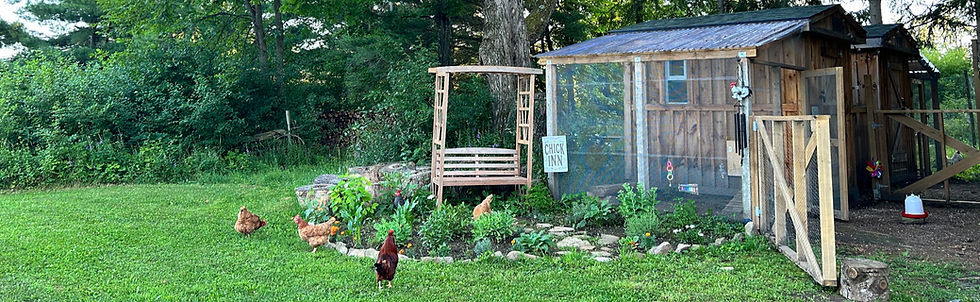
Nestled under a canopy of spruce trees near Perth, Ontario, we provide a loving forever home to 24 rescued chickens. Secondhand Stories is proud to be Canada’s first registered charity dedicated chicken-exclusive sanctuary.
Our mission is to inspire compassion for chickens through rescue, advocacy and education.
.png)


Quarterly Update: July to September 2026
This quarter started when we celebrated four years since moving in, on July 4th! Only a few short weeks later, we celebrated a second historic day - we received our charitable status! Behind the scenes, we’re excited to announce that we’ve started prepping our first-ever strategic plan! We are looking to expand our board of directors as we enter this exciting new time for the sanctuary (more details here). So many things make this sanctuary something I’m incredibly proud to b


What Is A Sanctuary?
The simplest answer is that sanctuaries are a place of refuge where animals' needs come first. And that sounds great, but putting that into action is more complicated than it sounds. So, of course, we’re writing a blog about it. Inspired by Open Sanctuary and Microsanctuary Resource Center resources, we’re diving into what a sanctuary is… and what it’s not. “It’s about whether the organization maintains a culture, philosophy, and strict policies around compassionate care, and


Sanctuary Operations Manual
What does it take to rescue chickens? It's a question we get often and it's the hardest to answer. The short version would go something like "Everything. It takes everything, plus some. It's like being responsible for 21 toddlers at once, but ones who can't speak your language." The long version is our operations manual. We first published our manual in 2021, and since then, it has undergone yearly revisions. As we've grown, we've improved and updated sections. It's a 24-page


2026 Goals & Budget
Secondhand Stories' mission is to inspire compassion for chickens through rescue, advocacy, and education. This upcoming year, we have 15 big goals. We're dreaming bigger than we ever have before, but it's a dream we know we can make a reality with your support. Read on to learn more about what we have planned and what it will take to get there: Animal Care & Infrastructure Recruit & Train Caretakers: Successfully recruit and fully train 2-3 new animal caretakers (via Canad


Why Sanctuary?
Every year, billions of animals are killed for food. For most people, grasping what this means is incomprehensible, and the numbers become abstract. Farm sanctuaries play a crucial role in helping people connect with the individuals who have survived exploitation. Each of our twenty rescued chickens is a tangible reminder of the personalities hidden within the abstract statistics of animal agriculture. While it’s true that sanctuaries may not appear to “maximize lives saved


Rehoming & Adopting Chickens
Rehoming a Chicken Secondhand Stories is at our capacity for compassionate care, and not able to accept any more rescues at this time. However, we would like to help how we can, so we have compiled this list of tips for rehoming chicken(s). Most requests we get are to accept surrendered roosters If a bylaw is preventing you from keeping your rooster please check out this link on how you can advocate to keep your chickens. If you have behaviour concerns, read this article on K


What is an Implant?
Reproductive illness is the leading cause of death in egg-laying hens. The single best medical therapy option for mitigating this risk is by having a hen implanted, which decreases reproductive productivity in chickens, giving their bodies a much-needed break. A hormonal implant is inserted under the skin, slowly releasing the drug Deslorelin (brand name Suprelorin) which controls the secretion of other hormones involved in egg production, temporarily stopping the laying of e


Let's Talk About Eggs
Secondhand Stories is a non-profit sanctuary that provides a loving forever home to 13 rescued chickens. We aim to provide a sanctuary where our rescued chickens can: live out their natural lives in peace; be free from exploitation and suffering; and have fulfilled and enriched experiences while living at the sanctuary. One of the most common questions we get as a chicken sanctuary is “What do you do with their eggs?” . Before I can answer what we do, let’s get into the who,
bottom of page